Literature review, step by step
Where to look, how to screen with clear criteria and a PRISMA diagram, and what to note for every paper.
When you prepare a thesis, finding and organising prior research is often as hard as choosing the topic. It feels as if collecting enough papers will sort itself out, but once they pile up, every study has a slightly different sample, method and result.
"What should I read them against?"
Here is where to search, how to choose, and what to note for each paper — in that order.
Why organise prior research
A literature review is not just a summary of past studies. It shows what earlier work has found and what it has not yet covered — the research gap.
That review is what your hypotheses rest on, and it guides which scales you use. How solid your literature review chapter is depends on how well you organised the prior research.
Where to search
- Broad academic search: Google Scholar, Scopus or OpenAlex
- Medicine and nursing: PubMed
- National databases for local theses and journals (in Korea, RISS and KCI)
Don't stop at one search term. Add synonyms and other phrasings — for "smartphone overdependence", also try smartphone addiction and problematic smartphone use. You will miss far fewer papers.
Choosing well beats collecting more
Picking the papers that bear directly on your study matters much more than collecting many. So set inclusion and exclusion criteria before you search.
Fix criteria such as population (e.g. university students), method (e.g. quantitative) and publication years, then filter by title → abstract → full text. The reading list shrinks fast.
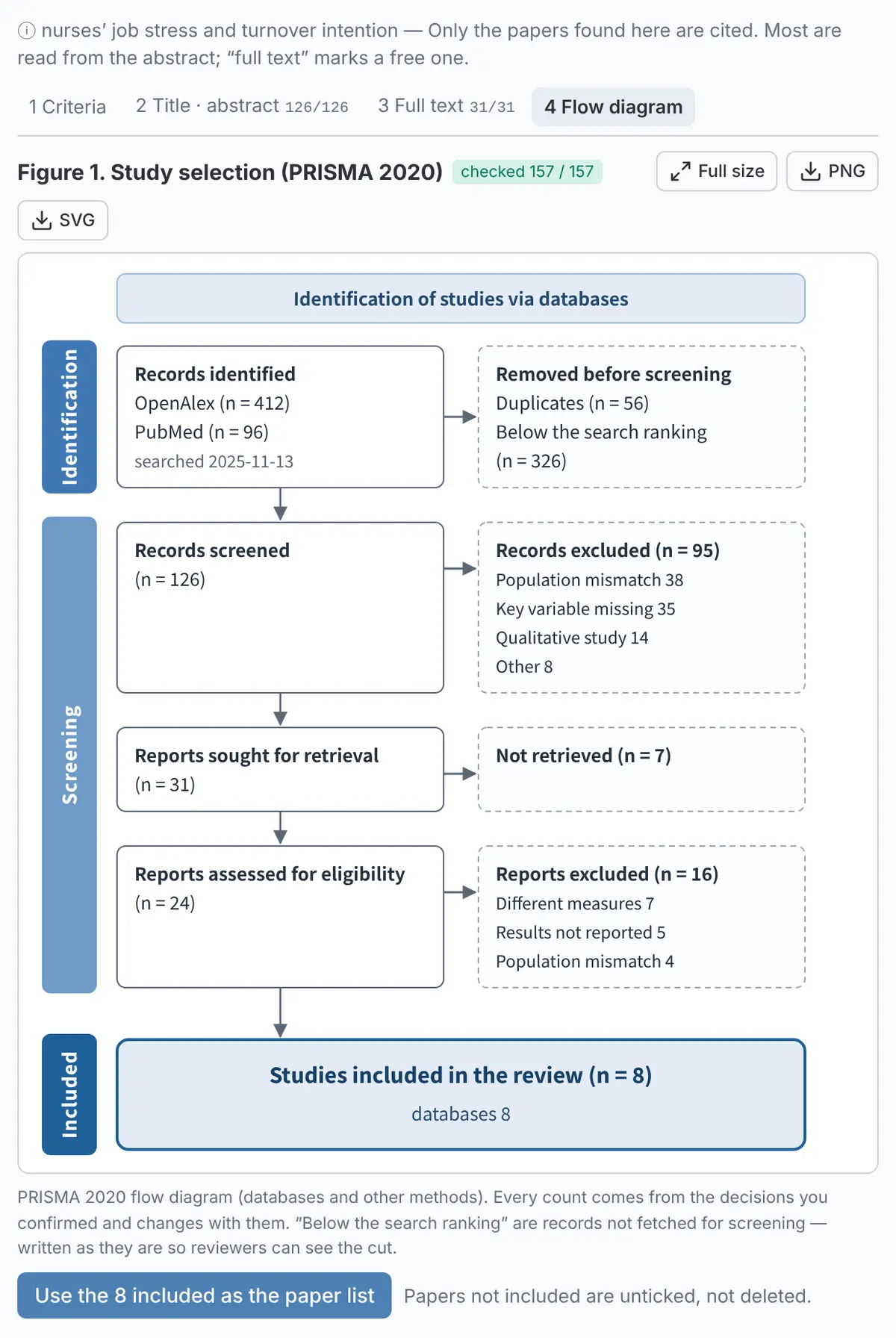
If your study must report how it selected papers — a systematic review, for example — record how many you found and how many you dropped for which reason in a PRISMA flow diagram.
What to note for each paper
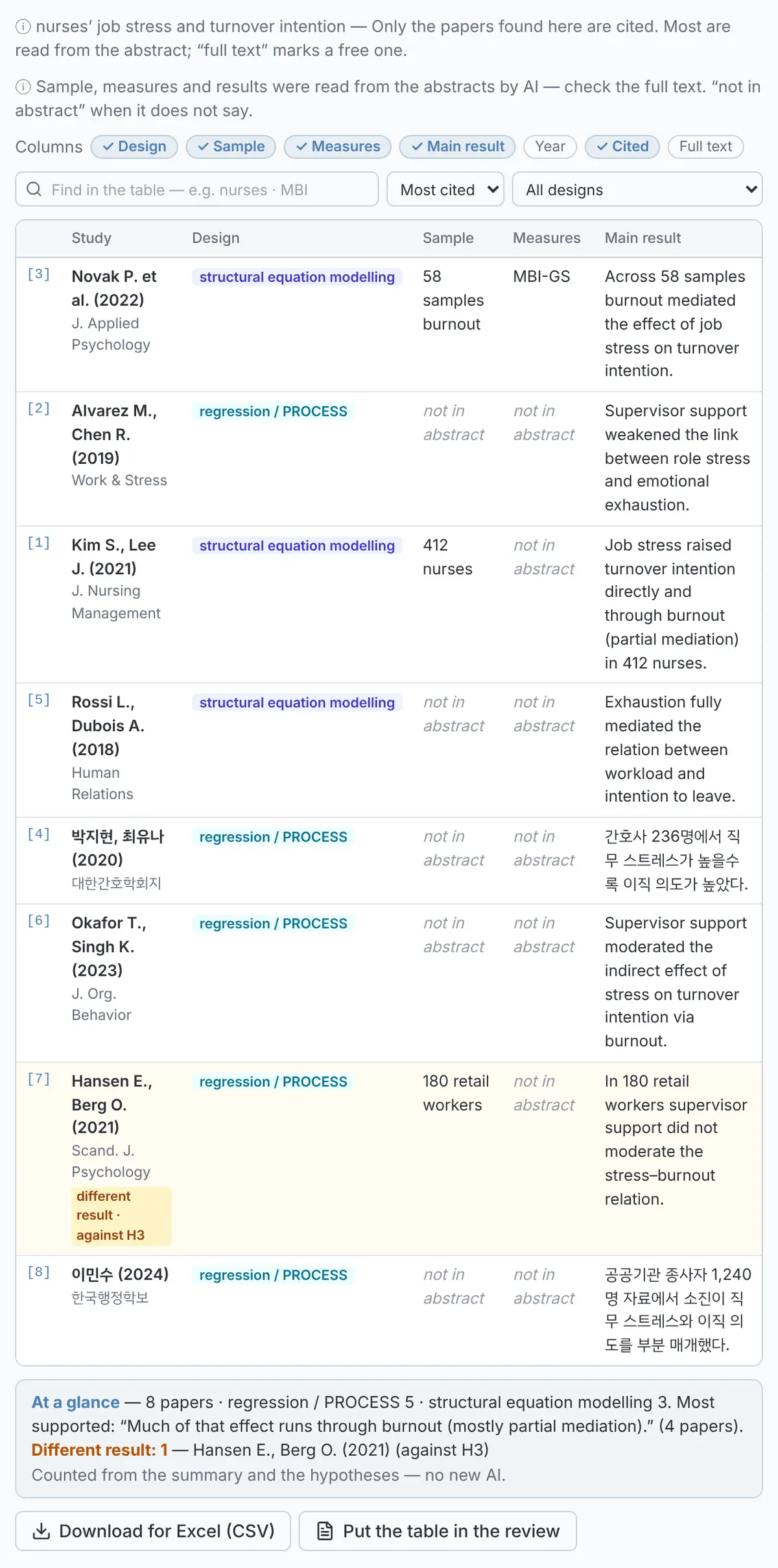
Put the papers you keep side by side under the same headings, and comparing them later is much easier. These are the usual ones:
- Population and sample size
- Study design
- Scales used
- Main findings
- Limitations
In a table like this, the results most studies share, the studies that disagree, and the parts nobody has covered yet start to stand out.
Record every source exactly and format references in your university's citation style from the start. Fixing them all at the end takes much longer than you expect.
In Skari
Done by hand, searching, screening and copying into tables can take days. That is why many researchers use tools for the repetitive parts.
The Skari AI start screen lays out the work in research order, from finding prior research to writing the report. Pick Prior research, or just type what you want to do.
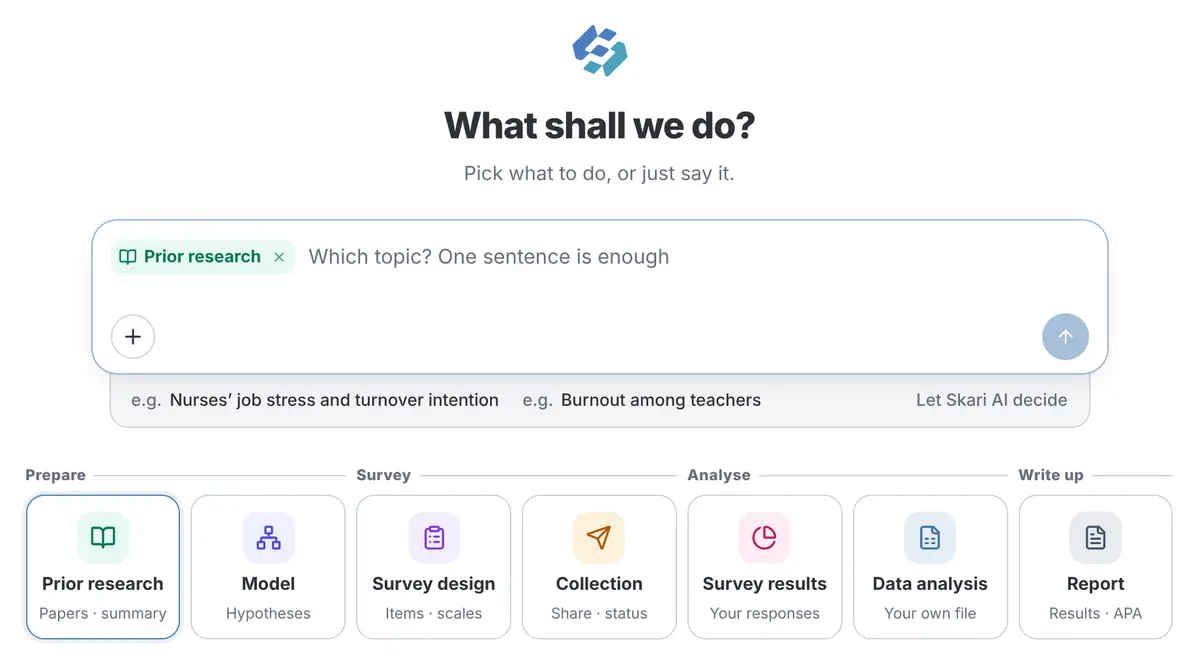
Describe your topic in one sentence and Skari searches OpenAlex and PubMed together, merging papers that appear in both.
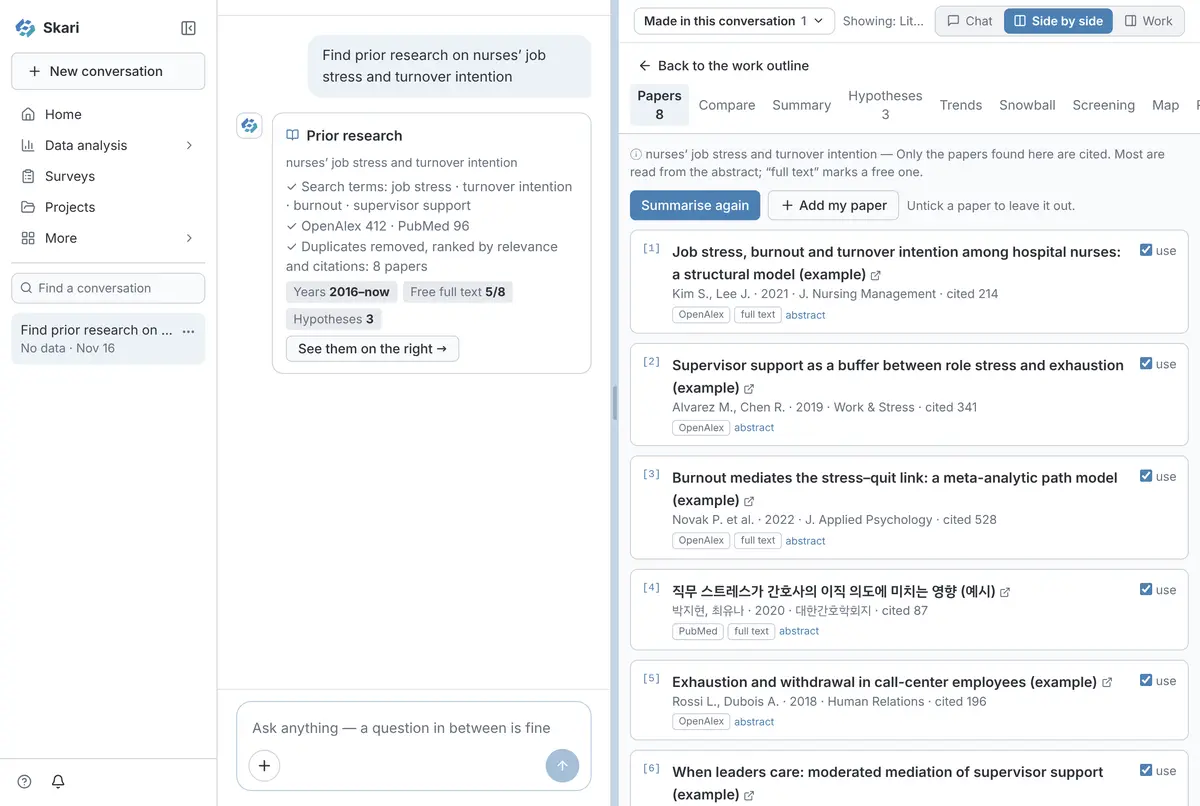
Search your own topic
Pick Prior research in Skari AI
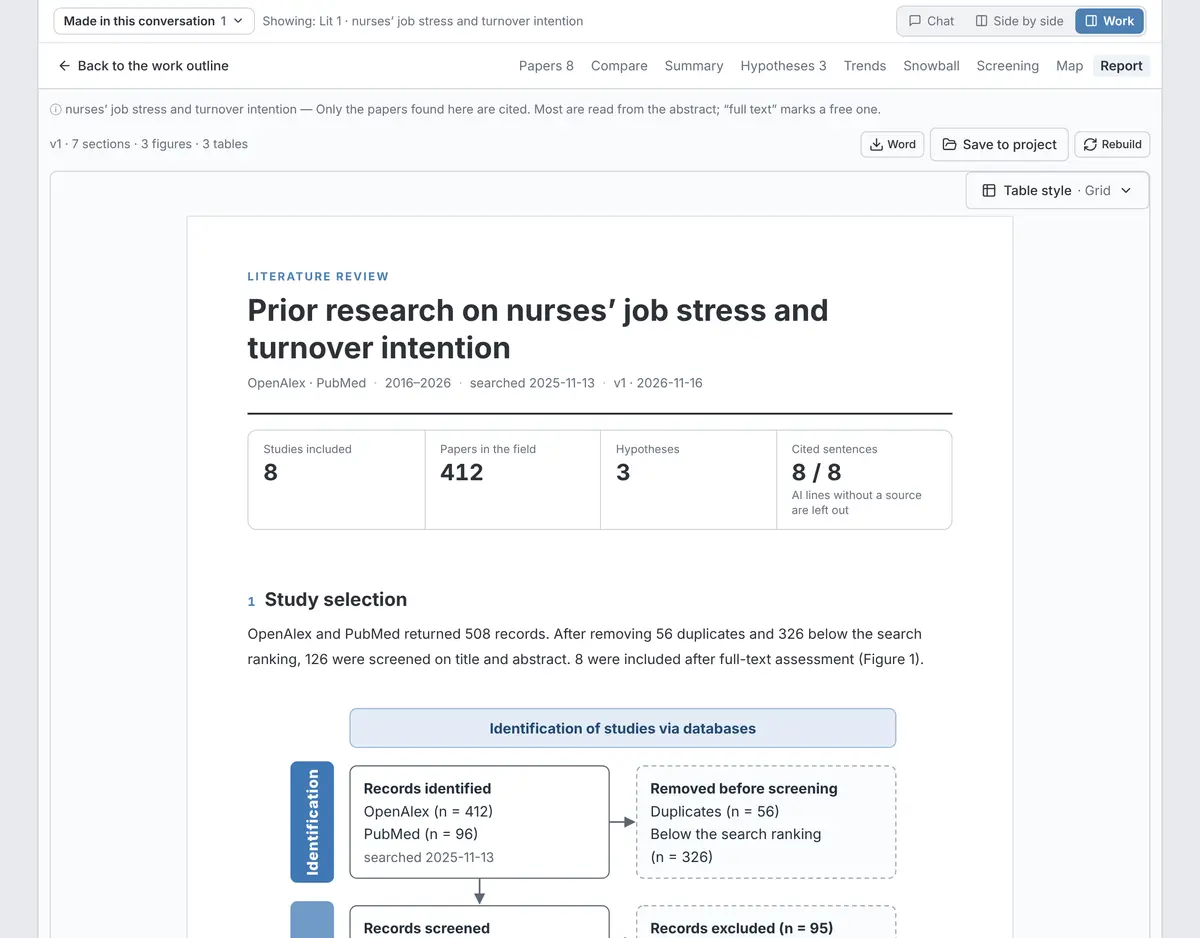
The AI suggests include or exclude from each title and abstract, but the final call is yours. The process is recorded as a PRISMA flow diagram automatically.
For the papers you keep, the sample, design, scales and main result are pulled from the abstracts into one comparison table. It also shows shared findings, research gaps and how many papers back each hypothesis — handy when you write your hypotheses.
Everything comes together in a literature review with a trends chart and APA references, ready to grow into your literature review chapter.
What matters in a literature review is not how much you collected but choosing what relates to your study and linking it logically. Less time searching and screening means more time reading and thinking.
Pooling many studies?The Academy's meta-analysis page shows how results from several studies are combined →